// MODULE 01 — ACTIVE
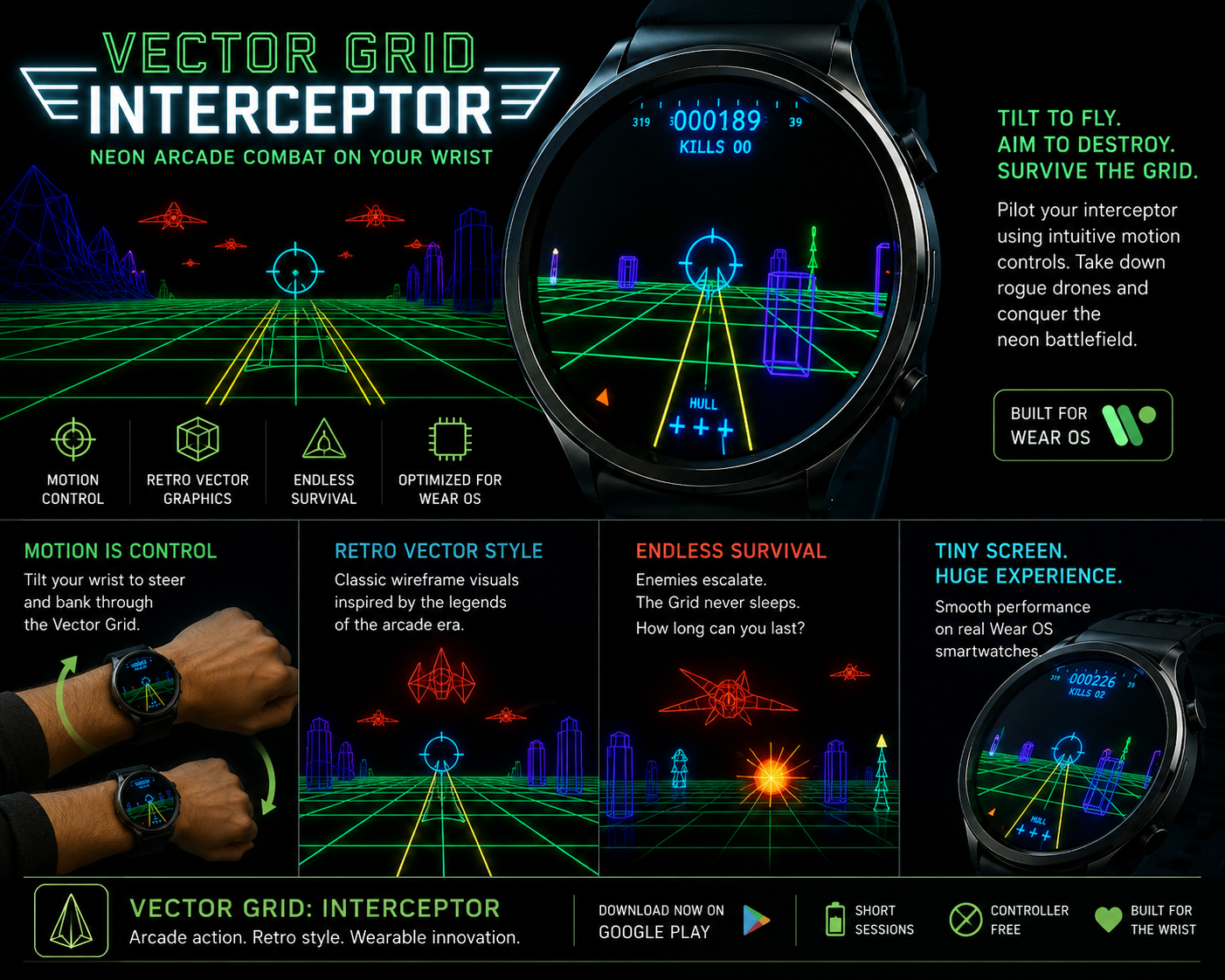
First-person arcade flight shooter. Wear OS. Motion controls. Wireframe world.
First-person arcade flight shooter. Wear OS. Motion controls. Wireframe world.
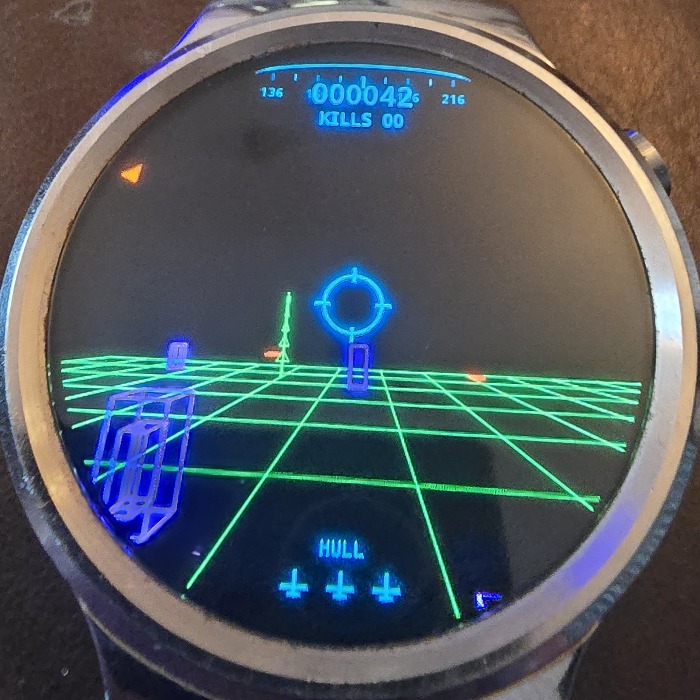
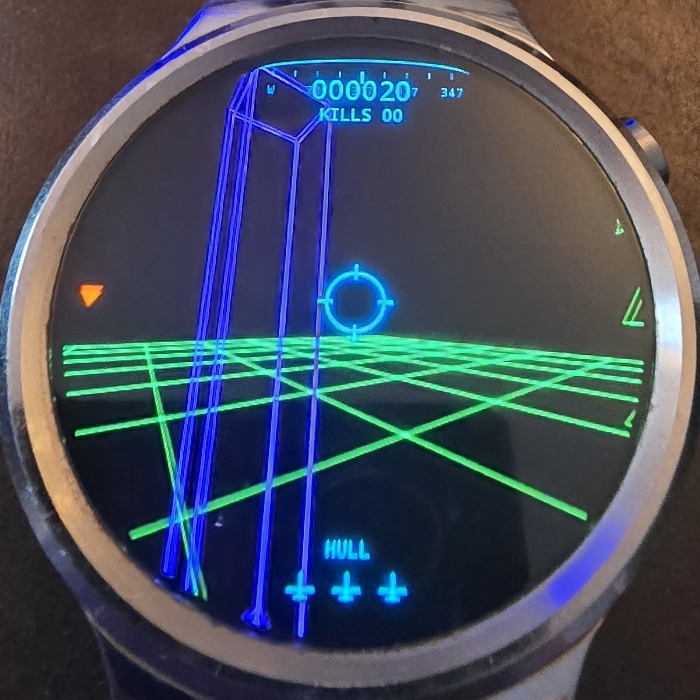
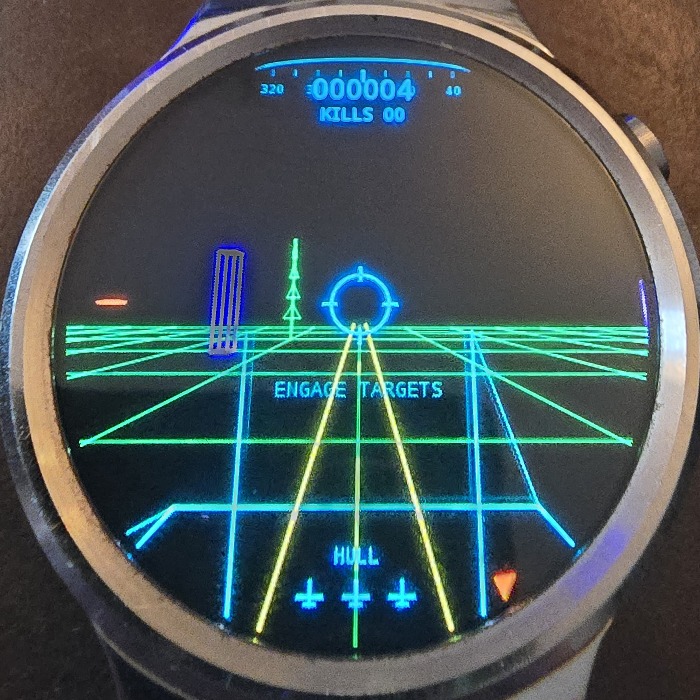
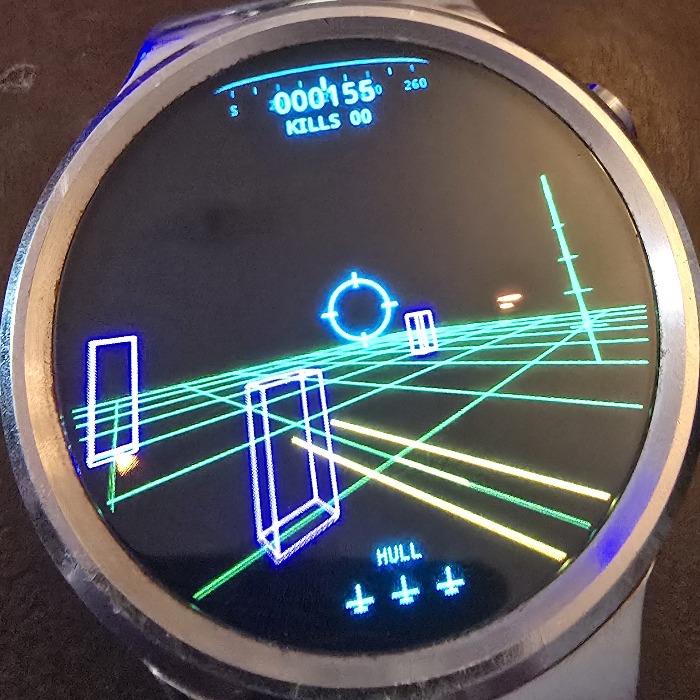
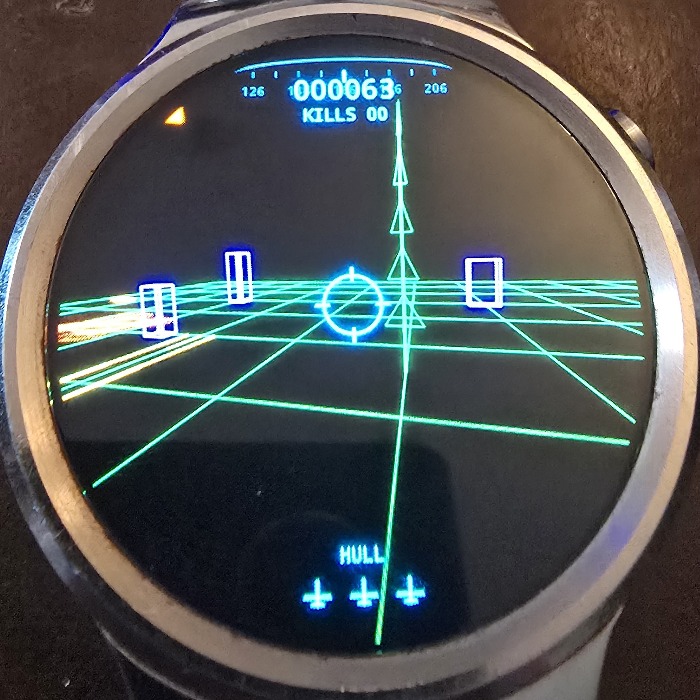
Interceptor drops you into a neon wireframe combat zone. Buildings cluster in districts. Towers pierce the sky. Bridges span open ground. All of it renders in real-time on a 400×400 round display via pure CPU rasterisation.
The world wraps toroidally — 13,200 × 13,200 units of grid. You never reach the edge. There is always more to destroy.
| World Size | ±6,600 units (wrapping) |
| Buildings | 72 destroyable structures |
| Towers / Bridges | 24 / 7 static structures |
| Render distance | 2,800 units |
| Frame rate | 30fps (33ms loop) |
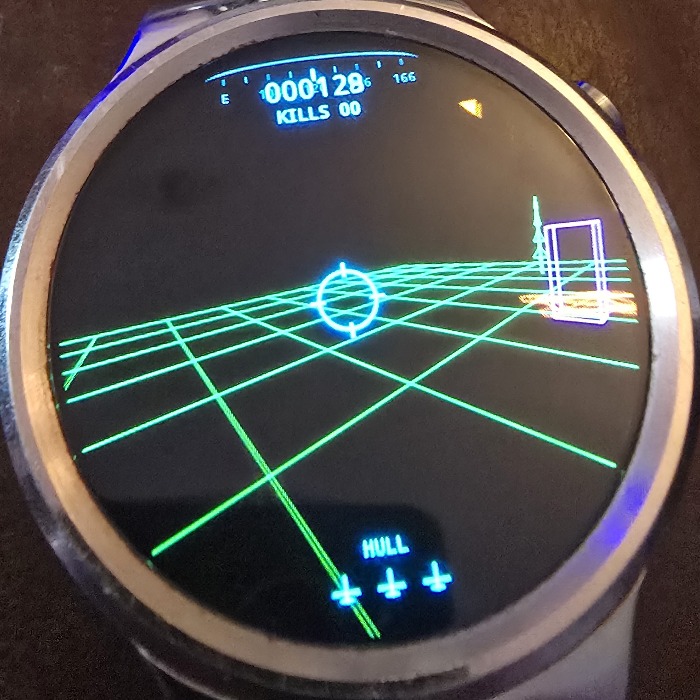
The watch is not worn during play. It is held in both hands — a miniature cockpit console. Tilt left to yaw left. Tilt toward you to climb. Tap the screen to fire.
Calibration captures your neutral orientation on launch. All input is relative. Every pilot gets a personalised zero.
7 simultaneous drones. Patrol until threatened, then engage. Two hits to destroy. First hit turns them hostile and red. Debris scatters on death.
Every 10 kills. Elongated fuselage, swept wings, four independent turrets. 120 ticks of warning before it appears. Two pulses of haptic feedback.
No bullet travel. Instant hit-test within 28 screen pixels of crosshair centre. Buildings register at 3.5× normal radius — they should feel satisfying to hit.
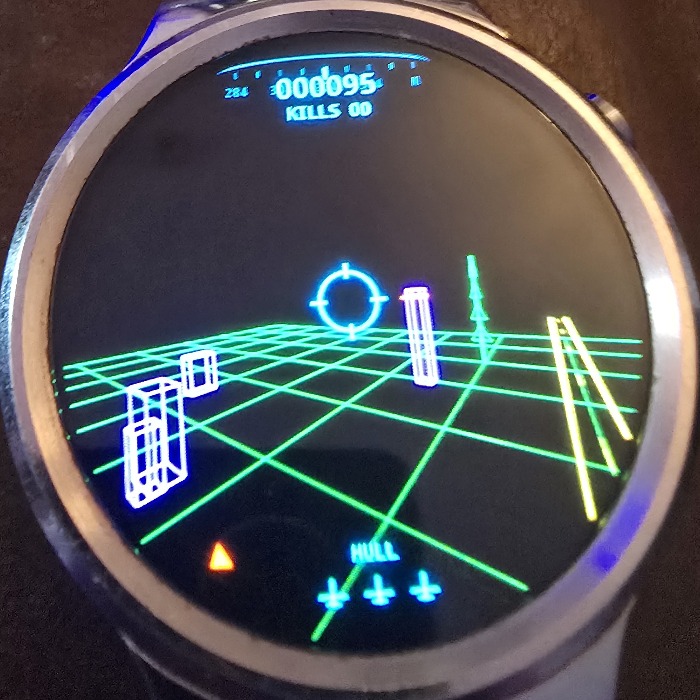
Buildings, arches, fuel tanks, radar dishes — all destroyable. 12 debris fragments per building. Physics simulation. They sink through the grid and dissolve.
The watch display is circular. The HUD is designed around that constraint — not fighting it. Compass at the top edge. Altitude meter on the right. Hull indicator on the left. Enemy arrow on the bezel.
Cockpit cracks appear as lives are lost. A red flash floods the screen on impact. The world degrades as you do.
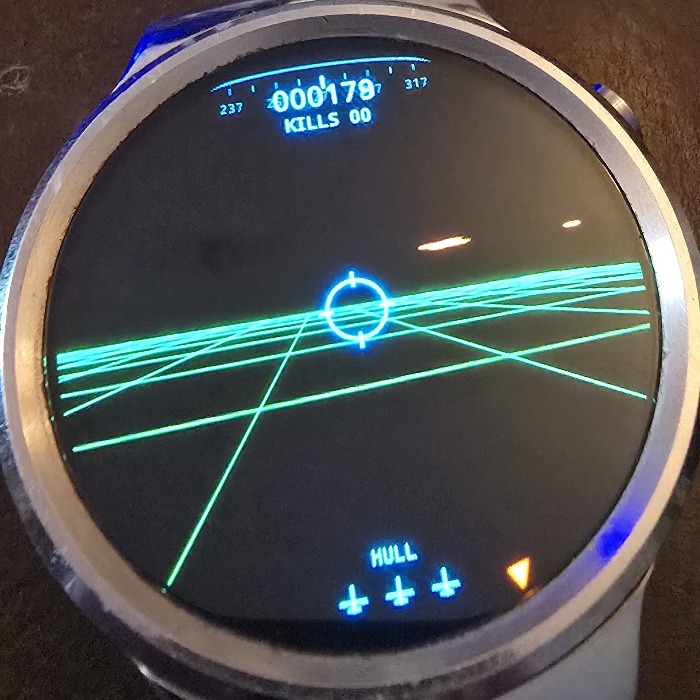
Interceptor is in active testing. Join the queue. We need testers on real hardware.
Join the Beta